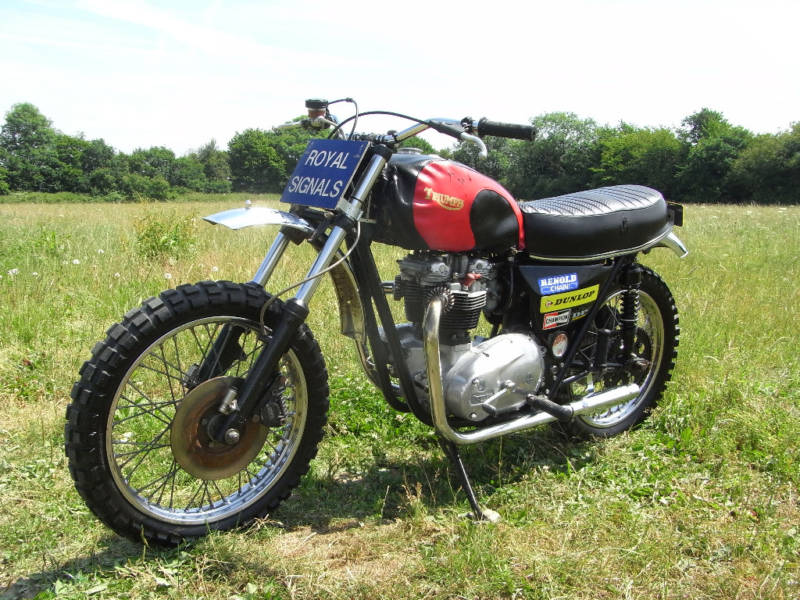
When I got my Tiger (TR7 not the Hinkley one) I thought my thin knobbilies would be a nightmare in the wet or in the winter.
Also we have got used to ‘the fatter the better’ philosophy these days and my skinnies looked so weedy I was seriously thinking of upgrading to fat stickies supermoto stylie…but the frame won’t take em.:Whistling:
But whilst my D675 Corsas give me fishtail soup and plenty of little lockups when the weathers cold the Continentals on my Tiger are brilliant - give real confidence and just hang in there…
Can’t explain it really as they are as soft as concrete especially on freezing mornings..:hehe::ermm::blink:???
well first off, why is ice slippery? when you make contact with ice the pressure slightly heats it enough that the surface melts creating the ability for slipping.
what does this means for tires? well if the tires was bald then the bike would be continually making a thin layer of water for it to slip on. so with knobbly tires think of it like claws.
as one of the “claws” goes over the ice it creates some pressure, melts the ice and slightly moves forward, and because of the spacing between “claws” the next bit of ice it contacts is not melted so it can grip onto it continuing the cycle.
this really has nothing to do with the fact that the tyres are thin but more to do with there structure.
In the snow, the narrower tyre has less contact surface, therefore the pressure increases allowing for the tyre to cut through the snow to the tarmac below.
Rally cars use skinny tyres for the snow, I dont know about tyre/ice contact points melting, I’m not the smartest fella out there, but even I can see that these might offer a bit less purchase than your knobblies!
1.As Kevsta said, the weight of you and your machine will be concentrated in a smaller area meaning deeper penetration (easy!) in the snow, that means the tyre could actually touch the road.
2.Then there’s the blocks of rubber to further increase the weight on smaller areas.
3.Plus the side of these blocks are offering big edges in the snow generating slip angles.
4.The large gaps between the blocks on knobblies allow snow to clear the tread blocks during rotation instead off becoming compacted in the grooves and acting like a slick tyre.
5.The tyre caucus on a knobbly is built to be more mailable and deform more. Combine this with the rubber compound the tyre will generate heat if the pressures are suited to the conditions, so any contact with the road surface means the rubber would be at a temperature were the rubber will offer some grip.